Blog/Personalized
What an "AI SDR" gets wrong (and what to use instead)
Buyers reply to people, not to digital employees: AI belongs in the loop as leverage, not as a replacement persona.
An AI SDR is sold as a digital employee: it prospects, writes, sends, and books meetings while you sleep. The model underdelivers for a simple reason: buyers reply to people. The version that works keeps a human in the loop and gives them AI leverage at every step: finding, qualifying, drafting. The human approves and converses. The machine does everything else.
The promise and the problem
The promise is seductive: headcount without the human. Set it loose, watch meetings appear.
The problem shows up in the replies, or the lack of them. When a "digital employee" writes and sends alone, quality control disappears at exactly the moment it matters: the first impression with a buyer.
And buyers have learned the pattern. A slightly-off message from a name that answers strangely gets ignored, or worse, reported. The cost lands on your domain and your LinkedIn accounts, which are not renewable resources.
Where the AI SDR model breaks
Accountability. When nobody approves each message, nobody owns the mistake. The error rate that's tolerable in a draft is intolerable in a sent message.
The conversation. Booking a meeting is a human moment. Buyers ask real questions, and an AI improvising answers about your product in your name is a risk you feel later.
The learning loop. A human who reads replies learns what's landing and adjusts. A fully automatic loop optimizes for sends, and sends are not the goal.
The model that works: system, not employee
Flip the frame. Don't hire a fake person; build a real system.
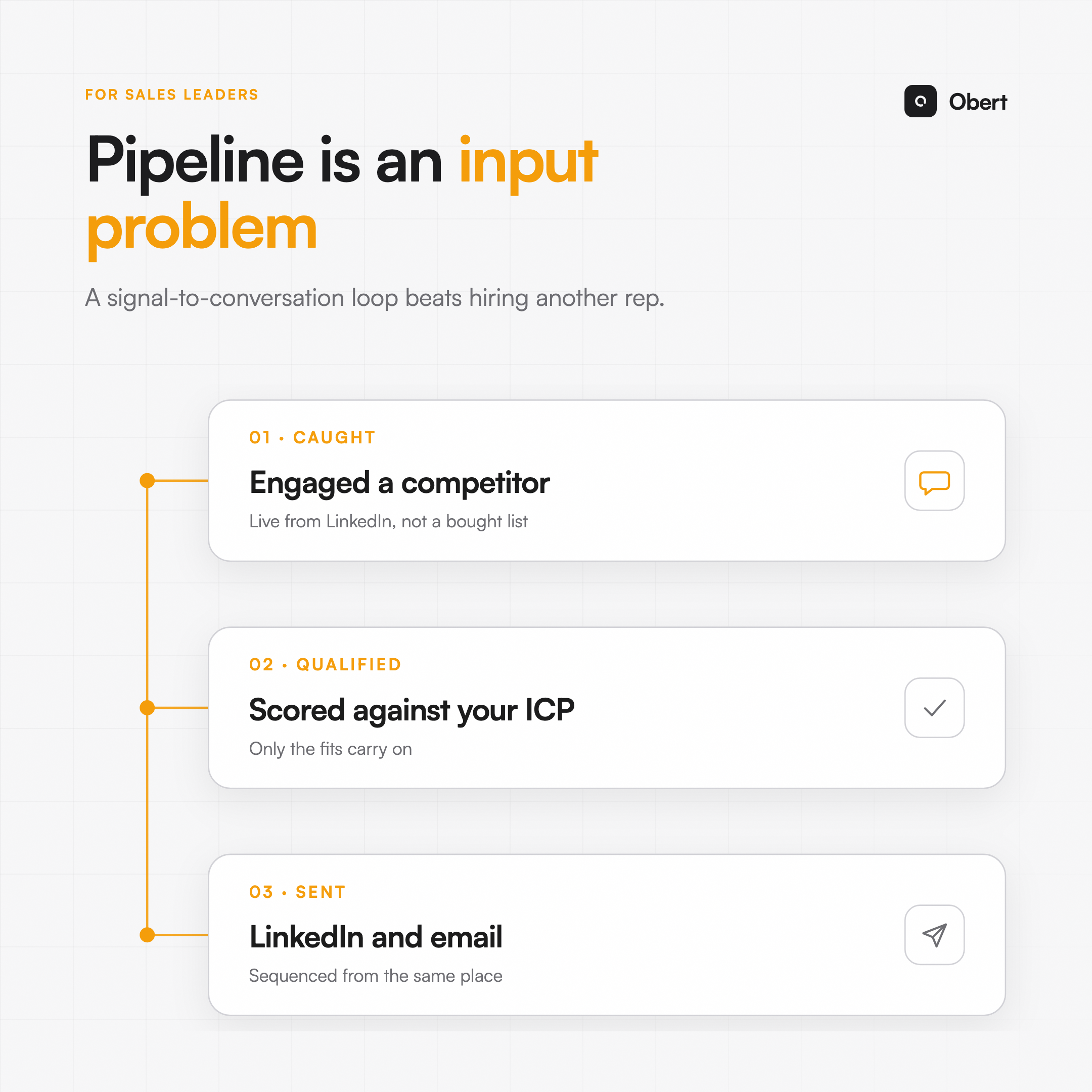
AI qualifies every lead against rules you wrote, and shows its work. AI drafts every message in your voice, from the lead's real activity. You approve in minutes, and you take the conversations.
The output looks like a great SDR's work. The difference is that a human stands behind every sent word, so quality holds at scale. That's why qualified, human-approved outreach averages 20% replies in our data, roughly double the published all-comers benchmark.
The honest trade
The system model costs you minutes a day of approvals. The AI SDR model costs you zero minutes, and pays you back in silence and account risk.
If a fully automatic pipeline actually worked, we'd sell one. We built the approval queue instead, because the data says relevance and accountability are what get replies.
Obert is the system model: agents qualify and draft, you approve and converse. Setup and answers run through Ask Obert in plain language. Try it now. 7-day free trial, cancel anytime.
Matan Kleyman
Founder, Obert
Building Obert. The LinkedIn outbound system for founders and lean GTM teams. Previously scaled outbound motions at early-stage B2B startups.