Blog/Qualified
LinkedIn outreach reply rates: data from 133 campaigns
Reply rates follow lead quality: qualifying every lead before messaging doubles the published benchmark.
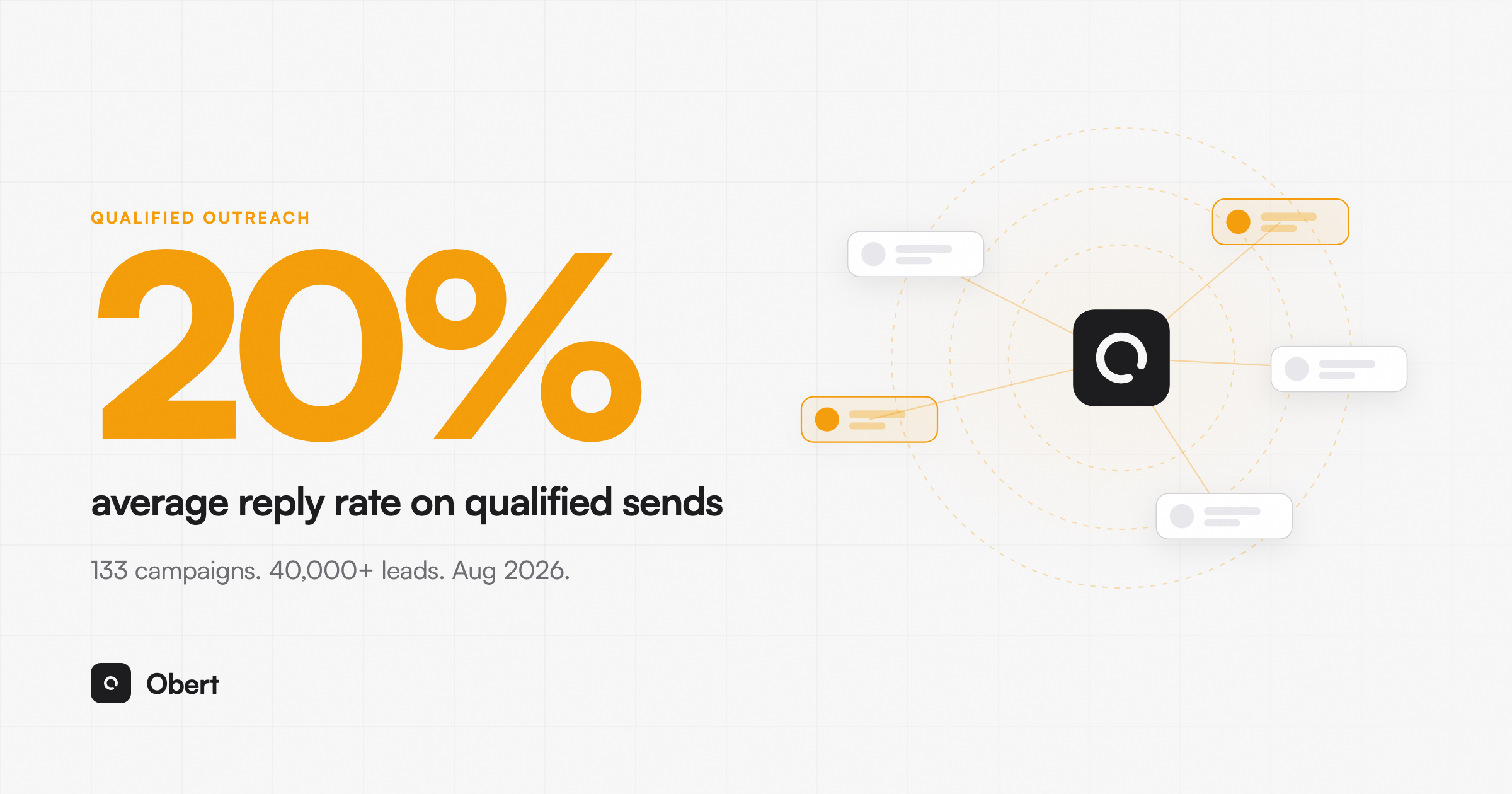
The average reply rate across 133 LinkedIn outreach campaigns run through Obert is 20%, measured across 40,000+ qualified leads from 24 B2B teams (August 2026). The largest published benchmark, from Expandi's study of 6.7 million messages, is 10.4%. The difference is not magic. It comes from who you message, not what you write.
Where the data comes from
We looked at every campaign that ran through Obert up to August 2026. That is 133 campaigns, sent by 24 B2B teams, reaching more than 40,000 leads.
A reply means a real answer from the lead, in any direction. "Not interested" counts. An auto-reply does not.
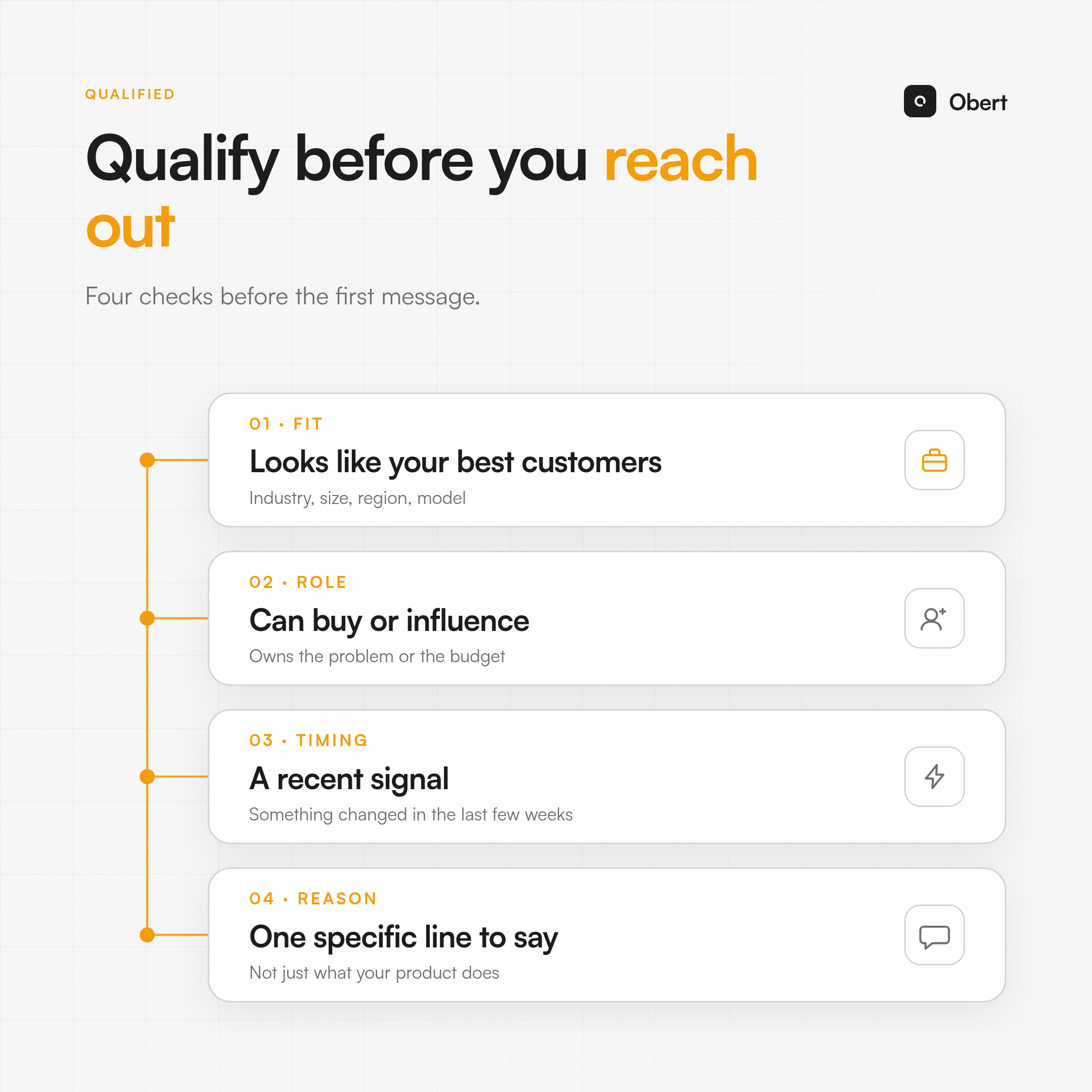
One important note: these campaigns only message qualified leads. Every lead was checked by an AI agent against the team's ideal customer before any message went out. That filter is doing a lot of the work here, and we'll show why.
The numbers
| Metric | Value |
|---|---|
| Average reply rate, all campaigns | 20% |
| Median reply rate, mature campaigns | 18% |
| Top quartile of campaigns | above 33% |
| Published industry benchmark (Expandi, 6.7M messages) | 10.4% |
Why the gap against the benchmark
The published 10.4% average comes from all campaigns: sprayed lists, bought lists, zero targeting, everything mixed together.
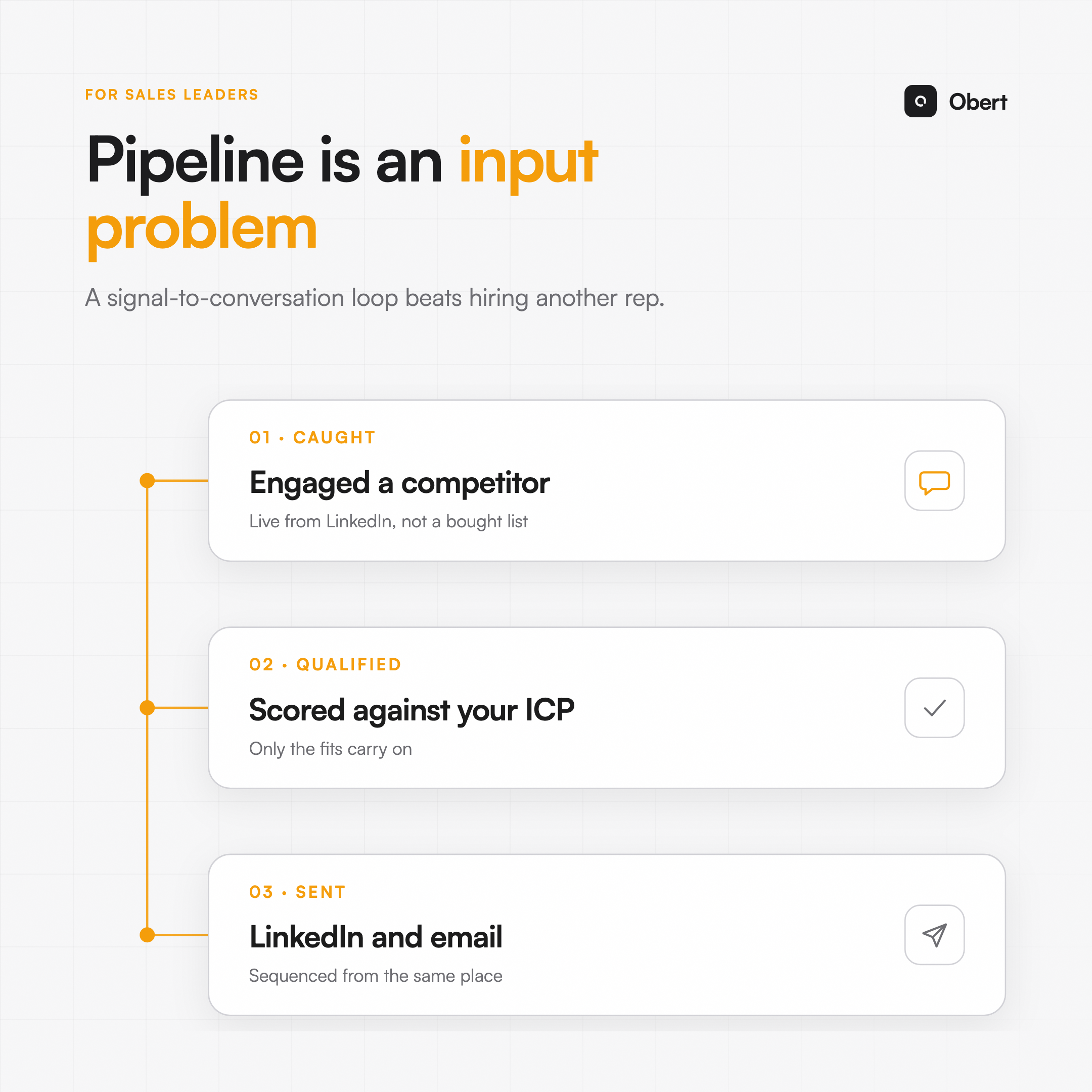
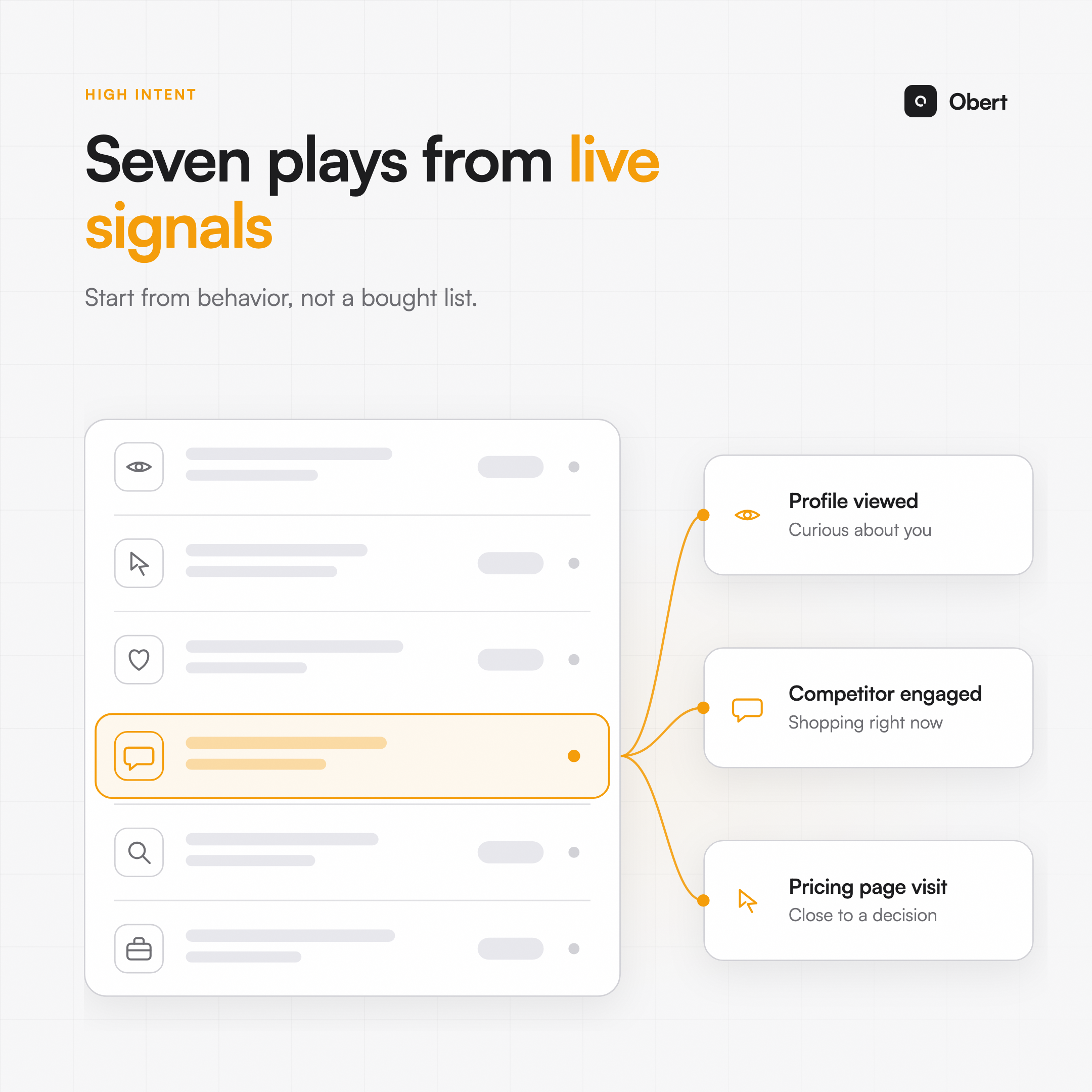
Our campaigns start from a different place. Most leads enter from a signal: they visited the website, engaged with relevant content, or match a tracked keyword. Then an agent qualifies each one against the team's ideal customer and removes bad fits.
So by the time a message goes out, the lead already showed some intent and passed a fit check. Reply rates follow lead quality. The message matters, but the list matters twice as much.
What the top quartile does differently
Campaigns above 33% share three habits.
They start from warm signals. Engagers and website visitors reply more than cold database lists. The lead has seen the company before the message arrives.
They keep the first message short. One or two lines, one clear reason for writing, no pitch deck in the first touch.
They send from a real voice. Messages written in the sender's own tone, referencing the lead's actual activity, not a template with a first-name token.
What "normal" should mean for you
If you run cold outreach on bought lists, 10% replies is a fair target. That matches the published data.
If you qualify leads before messaging, 18 to 20% is the realistic middle. If you also start from intent signals, above 30% is reachable. Our top quartile lives there.
Below 10% on qualified leads usually means a message problem. Below 5% usually means a list problem.
Method notes
Sample: 133 campaigns, 24 teams, 40,000+ leads, measured through August 2026. Teams are B2B, mostly software. Reply = human response of any kind. Campaigns with fewer than 50 sends were excluded from the median. This page is updated quarterly; numbers carry their date.
Obert qualifies every lead before a message goes out. That's where the 20% comes from. Try it now. 7-day free trial, cancel anytime.
Matan Kleyman
Founder, Obert
Building Obert. The LinkedIn outbound system for founders and lean GTM teams. Previously scaled outbound motions at early-stage B2B startups.