Blog/High intent
Pipeline generation on LinkedIn: a sales leader's playbook
Pipeline problems are usually input problems: a repeatable signal-to-conversation system beats hiring another rep.
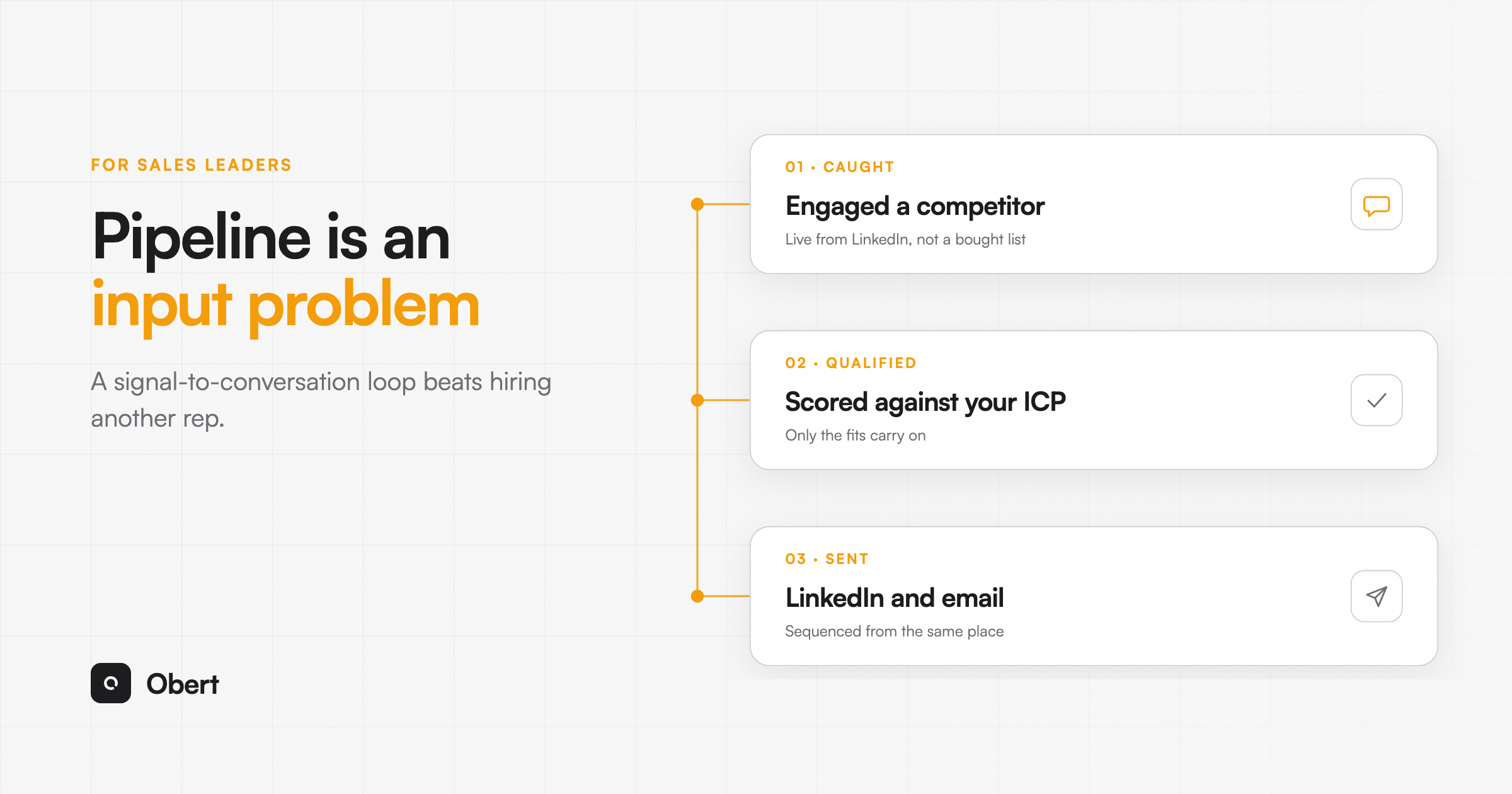
Pipeline generation on LinkedIn, for a sales leader, is a system question before a headcount question: signals find buyers showing intent, qualification filters them, reps take the conversations. When that loop runs, each rep supports more pipeline; when it doesn't, another hire just scales the inefficiency. This playbook covers the system, the team setup, and the numbers to manage it by. (We mean sales pipeline here, not the data kind.)
The math that changes the decision
The traditional answer to a pipeline gap is a hire: an SDR, ramp time, management load, and volume activity that buyers increasingly ignore.
The system answer: your existing reps take conversations that a signal-and-qualification loop creates. One warm reply from a qualified, intent-showing buyer is worth an afternoon of cold dials, and the loop produces them daily.
Most teams need both eventually. The order matters: system first, then headcount to scale what works.
The playbook
1. Put signals under the pipeline. Website visitors, competitor engagers, keyword posters, funding and job-change triggers. These are buyers already moving; the system catches them without rep time.
2. Standardize qualification. Write the ideal customer rules once, as a team asset, and let agents apply them to every lead. This ends the quiet chaos of each rep defining "qualified" differently.
3. Send from your reps' real profiles, safely. Buyers answer people. Each rep's accounts warm up and send within per-account limits, and every message can require approval. Nothing goes out that you couldn't stand behind.
4. One inbox, visible to you. Every reply across every rep and account in one queue. You see response times, hot threads, and who's converting conversations, without asking for screenshots.
5. Manage by the honest metrics. Reply rate by signal tells you where buyers are. Conversations per rep per week tells you if the loop feeds the team. Meetings from conversations tells you about your reps. Sends and connection counts tell you almost nothing; don't manage by them.
What good looks like
Qualified outreach in our benchmark data averages 20% replies, with top campaigns above 33%. For a team, the compounding number is conversations per week: steady tens of real buyer conversations flowing to reps changes the quarter.
Zenzap runs this shape: their whole LinkedIn motion in one system, with AEs calling the qualified leads who didn't answer on LinkedIn, from the same queue.
Obert gives sales leaders the loop and the visibility: signals, shared qualification, approval queues, one inbox. Book a demo or Try it now. 7-day free trial, cancel anytime.
Matan Kleyman
Founder, Obert
Building Obert. The LinkedIn outbound system for founders and lean GTM teams. Previously scaled outbound motions at early-stage B2B startups.