Blog/High intent
What Is Outbound Sales? How to Build an Outbound Strategy That Works in 2026
Outbound works when every message has a reason behind it: the right account, a recent signal, a qualified person and one sequence across channels.
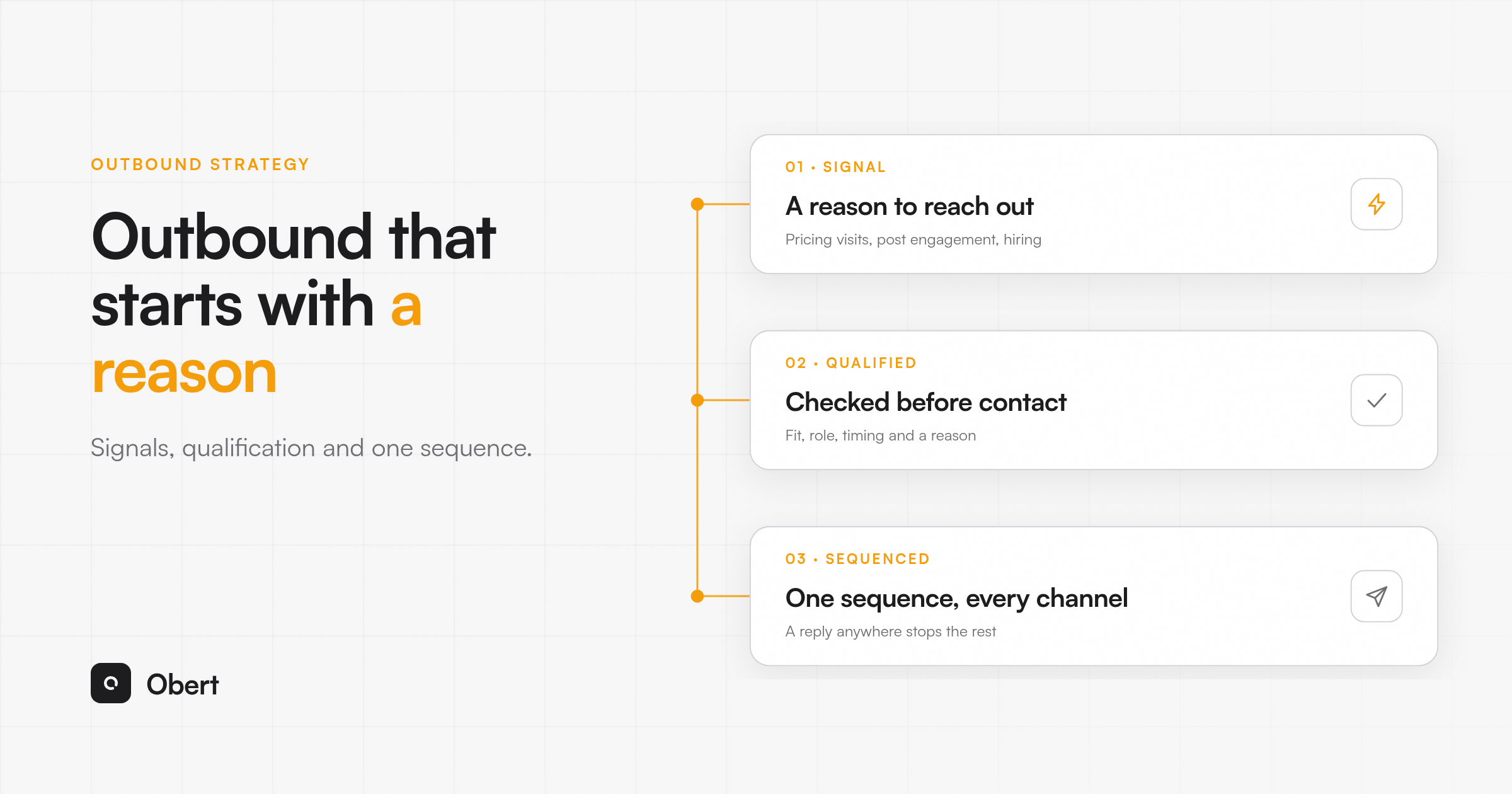
Outbound sales is when your team starts the conversation with buyers who have not contacted you yet, through LinkedIn, email or phone. A working outbound strategy has five parts: a tight definition of who you sell to, a reason to reach out now, qualification before contact, one sequence across channels, and metrics based on conversations rather than volume.
This guide walks through each part, then gives you a 30-day plan to launch it with a sales team.
What is outbound sales?
Outbound sales means your team picks the companies and people it wants to sell to and contacts them first. Inbound sales is the opposite: the buyer finds you, through search, content, ads or a referral, and raises their hand.
| Outbound | Inbound | |
|---|---|---|
| Who starts the conversation | Your team | The buyer |
| Who you talk to | Accounts you chose | Whoever finds you |
| Main channels | LinkedIn, email, phone | Website, search, content, ads, referrals |
| What controls volume | How many qualified people your team can reach | How much demand your marketing creates |
| Main risk | Contacting the wrong people, or the right people with the wrong message | Waiting for buyers who never arrive |
Most B2B teams need both. Outbound is the part you control directly: you decide who hears from you this week.
Where does outbound go wrong?
Three problems show up again and again in outbound programs:
- The wrong people get contacted. Lists built from job title and company size alone include many people with no reason to buy now.
- The message has no reason behind it. A message that could be sent to anyone reads like it was.
- The channels don't know about each other. When LinkedIn, email and calls run in separate tools, a buyer who replied on LinkedIn can still get the next email.
For a baseline: Expandi analyzed 6.7 million outbound messages sent through its LinkedIn automation platform from 13,302 LinkedIn accounts between May 2025 and April 2026, and found an average message reply rate of 10.4% (Expandi, 2026). The steps below are about getting your team above that line.
Step 1: Define who you sell to, in plain sentences
Job title and company size filters are not enough. Write down who buys from you and what is usually happening at their company right before they buy.
A useful definition has three parts:
- The company: industry, size, region, and anything that makes them a fit (for example, "sells to other businesses and has a sales team of three or more").
- The person: the roles that buy, and the roles that influence the purchase.
- The trigger: what tends to happen at a company before it buys from you. For example, a new sales leader, a funding round, or hiring for sales roles.
Write it as sentences, not as dropdown filters. A sentence like "B2B software companies with 50 to 500 employees that just hired a new VP of Sales" is something your whole team, and any tool you use, can apply the same way.
Step 2: Pick two or three signals that mean "now"
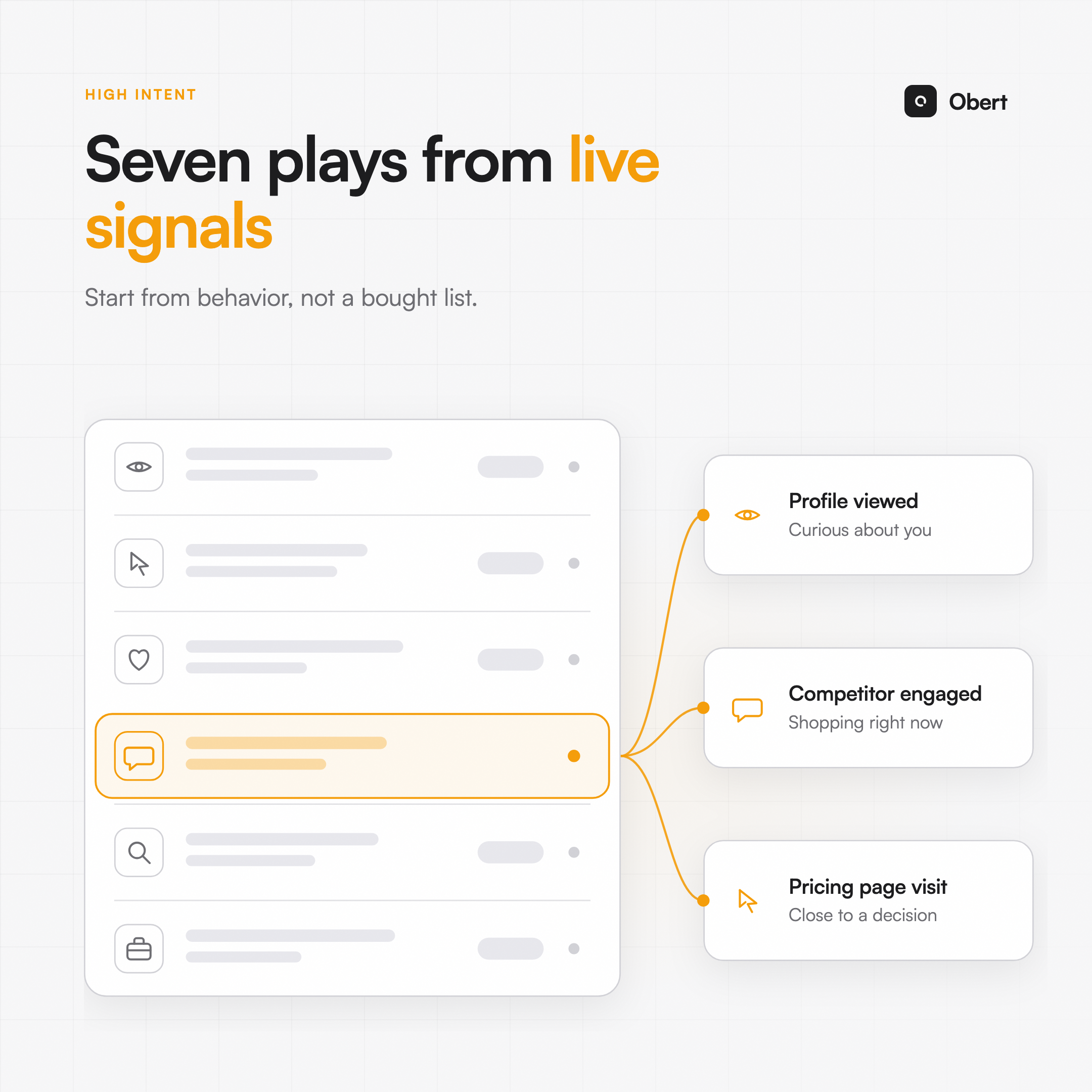
A signal is an action that suggests someone may need what you sell soon. Signals turn a cold list into a timely one.
Signals from your own channels:
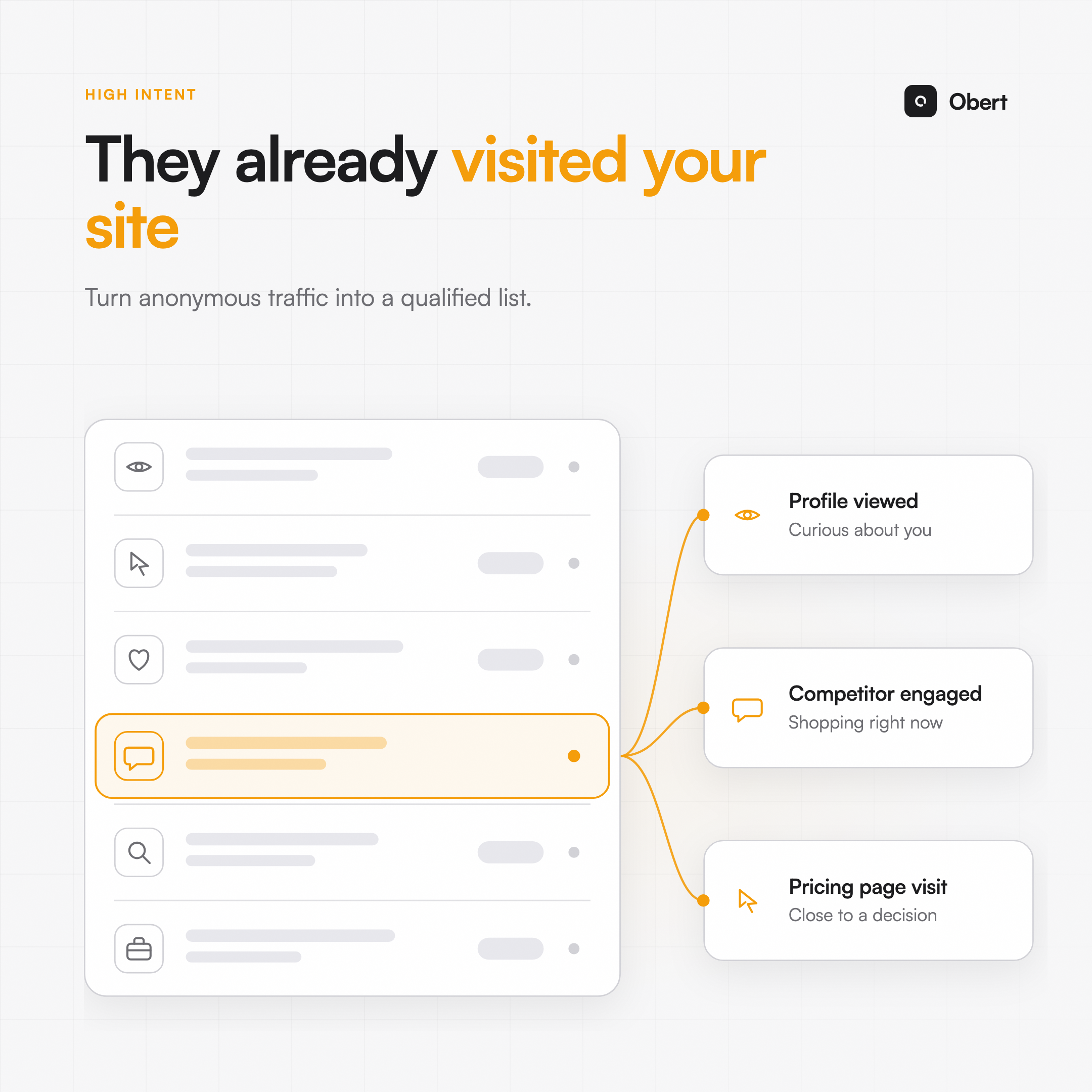
- Repeat visits to your pricing or demo pages
- People engaging with your company's or founder's LinkedIn posts
- New followers of your LinkedIn company page
Signals from outside:
- People engaging with a competitor's posts
- Hiring for roles your product supports
- New leadership or funding
Start with two or three signals you can act on, and add more only when the first ones are working. For seven ways to act on them, see our signal-based selling plays.
Step 3: Qualify every lead before you contact them
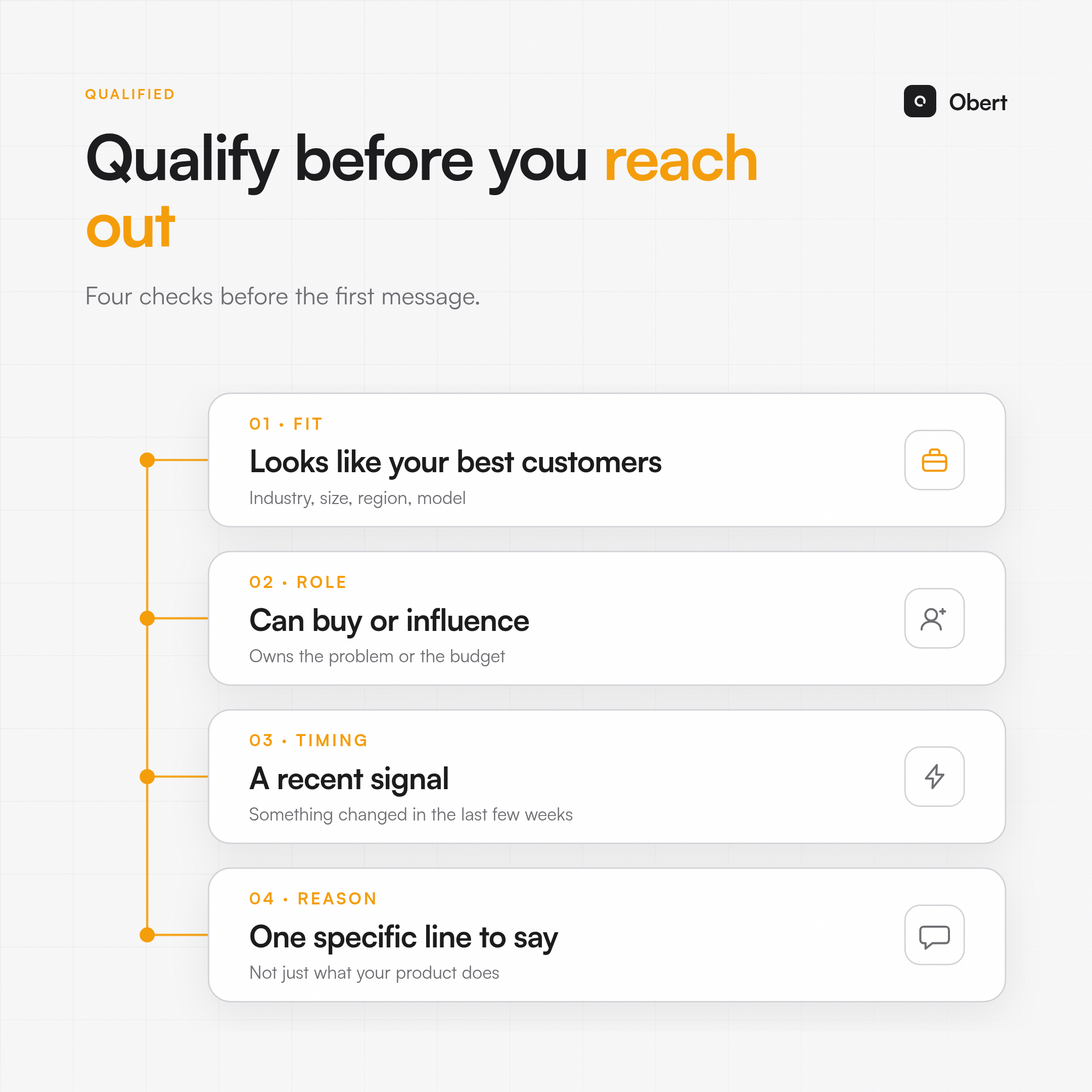
A signal tells you something happened. It does not tell you the person is a good fit. Before anyone gets a message, check four things:
- Fit: does the company look like your best customers?
- Role: can this person buy, or influence the decision?
- Timing: is the signal recent?
- Reason: do you have something specific to say?
A lead that fails any of the four should not get a message yet. Fix who you contact before you rewrite what you send. Here is a full guide, with a free scorecard, on how to qualify leads before outreach.
Step 4: Build one sequence across channels
Buyers use more than one channel, so a sequence can too. An example pattern for B2B:
| Day | Step | Purpose |
|---|---|---|
| 1 | LinkedIn connection request, no pitch | Get visible |
| 3 | Short email that references the signal | Give the reason for reaching out |
| 5 | LinkedIn message if connected | Continue where the buyer is active |
| 8 | Email follow-up with one useful resource | Add value, not pressure |
| 10 to 12 | Call to leads who engaged | Turn interest into a conversation |
The exact days matter less than two rules: every step has a job, and a reply on any channel stops the rest. The second rule is hard to keep when each channel lives in a different tool.
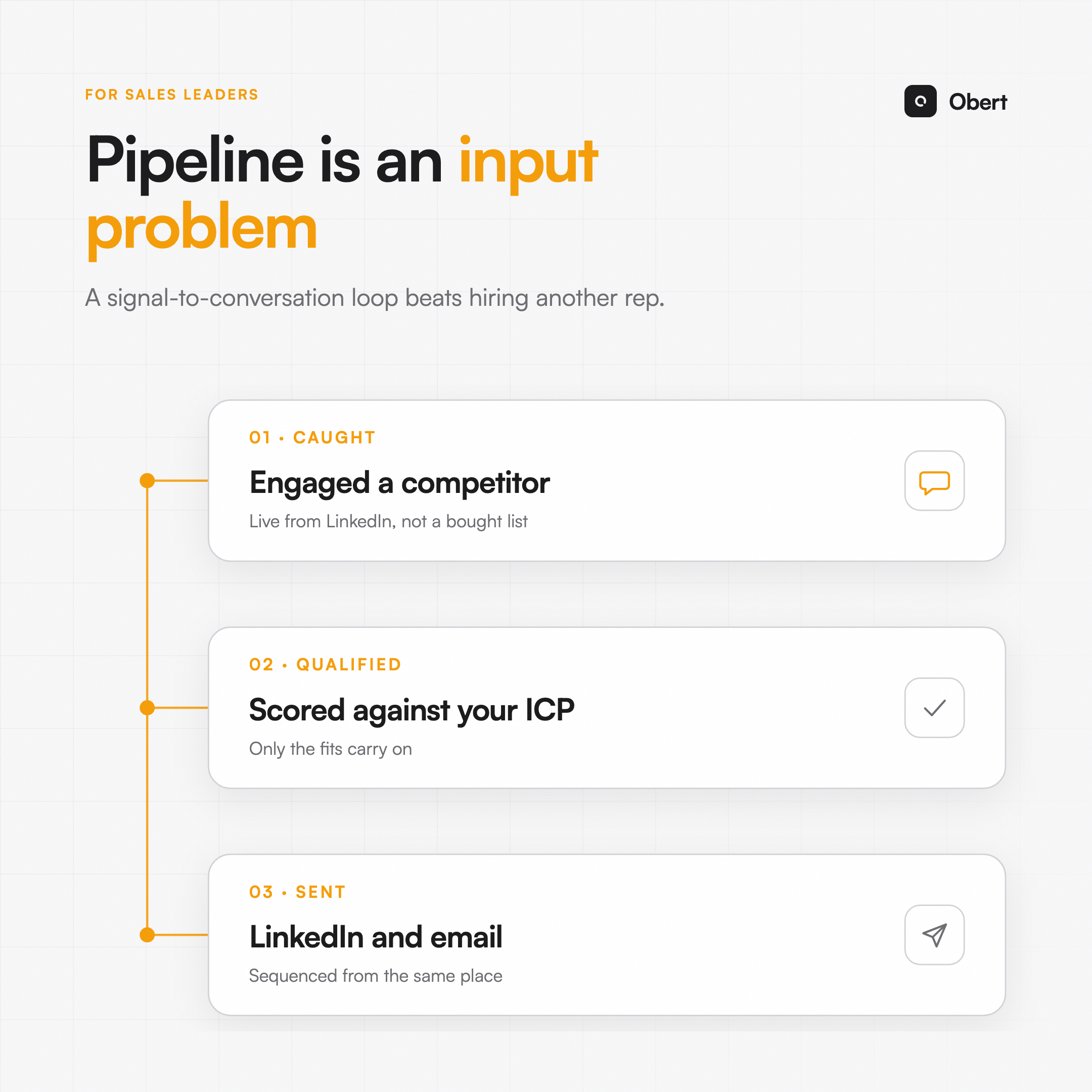
Obert is built for this. Obert's campaigns run LinkedIn and email steps as one sequence, with delays and branches that change path based on what the lead does. Replies from every sender and both channels land in one inbox, and calls are click-to-call from the same platform. If you are comparing tools for this, see how Obert compares.
Step 5: Write messages that start with the signal
The signal is your opening line. Compare:
- Weak: "Hi Dana, I help sales teams book more meetings. Do you have 15 minutes this week?"
- Stronger: "Hi Dana, saw you're hiring two SDRs. When a team adds new reps, keeping them supplied with qualified leads becomes its own job. Is that on your radar yet?"
The second message shows why you are writing to this person now, names a problem they may have, and ends with an easy question instead of a meeting request.
Three rules for first messages:
- Keep it short enough to read on a phone without scrolling.
- One idea per message.
- Ask a question that is easy to answer.
For message structures to start from, see our LinkedIn cold message templates.
Step 6: Follow up without being annoying
A buyer who ignores the first message may still answer a later one, if it gives them a new reason. Each follow-up should change something: the channel, the angle, or the value offered. "Just checking in" changes nothing.
End the sequence with a short message that closes the loop politely. It gives the buyer an easy way to say "not now", which is still useful information.
Which metrics matter?
Counting messages sent rewards volume. These five metrics reward targeting and relevance instead:
| Metric | What it tells you |
|---|---|
| Replies per 100 qualified leads | Whether targeting and messages work |
| Positive replies per 100 qualified leads | Whether the replies are the right ones |
| Time from signal to first touch | Whether you act while interest is fresh |
| Meetings booked per sender per week | Whether outbound produces real conversations |
| Pipeline from outbound | Whether it creates revenue, not just activity |
As a reference point, Obert customers average a 24% reply rate on cold outreach. One customer, DREAMS, went from LinkedIn plus Excel with almost no replies to a 40% reply rate. In the words of May Zeevi, Head of GTM at DREAMS: "Our outbound doesn't depend on motivation anymore. It's a system that works." (DREAMS case study)
Your 30-day outbound launch plan
| Week | What to do | Done when |
|---|---|---|
| 1 | Write your customer definition in sentences. Pick 2 to 3 signals. Agree on the four qualification checks. | Everyone on the team can explain who to contact and why. |
| 2 | Build the first list from your signals. Qualify every lead. Write the sequence and three message variations. | You have qualified leads and a sequence ready. |
| 3 | Launch with every sender. Answer every reply within one business day. | Every qualified lead is in the sequence. |
| 4 | Review replies per 100 qualified leads by signal and by message. Drop what doesn't work. | You know which signal and message to scale. |
What to stop doing: buying contact data for leads you haven't qualified, sending the same message to everyone on a list, and judging outbound by messages sent.
Run your outbound from one place
Obert is an AI outbound platform to run your GTM in one place: signals, qualification, LinkedIn and email sequences, calls and one inbox for every reply. See how it works for sales leaders, or check pricing. 7-day free trial, cancel anytime.
Last updated: October 10, 2026
Matan Kleyman
Founder, Obert
Building Obert. The LinkedIn outbound system for founders and lean GTM teams. Previously scaled outbound motions at early-stage B2B startups.